Updated
A learning environment with material and tasks in the browser
A learning environment puts learning material and tasks in the browser, gamified too. We design and build it at a fixed price agreed before we start. The price is about EUR 40,000–100,000 excl. VAT. Our reference is the economic literacy apps of NYT, used in schools across Finland. After launch, Care (Huolenpito) keeps the service working.
Get a priceTell us what you need
- Over 200 clients
- customer satisfaction
- Over 30 employees
Updated
Do you recognise these situations?
Learning material often exists, but it does not work the way learners would use it. These four situations show that a learning environment could help:
- The material sits in PDF files and slide decks that are hard to update and follow.
- Learners are not excited by the tasks, and you need them to stay engaged for longer.
- Teachers or trainers cannot see how learners are getting on.
- Adopting the service takes so much learning that many give up on it.
What each user needs from a learning environment
A learning environment always has a learner and a teacher or trainer. Their needs differ, so the service has to serve both.
| User | What they need | What the service needs |
|---|---|---|
| Learner | Clear tasks and a reason to carry on | A task view, progress tracking and, where it fits, gamification |
| Teacher or trainer | Easy adoption and ready-made material | Their own portal, group management and guides |
| Content producer | To update material without a developer | Content management |
| Client | A view of use and impact | Usage data and reporting |
What a learning environment includes
Learning material and tasks in the browser
The material and tasks work directly in the browser with nothing to install. Tasks can be text, images, tests or simulations, and we design them for the learner’s age and goal. Duunikoutsi is NYT’s free app for 13 to 25-year-olds, with tips for job hunting, tests and the rules of working life.
Gamification
Gamification helps keep learners engaged. NYT’s Yrityskylä Yläkoulu is an experiential game arena where ninth graders compete to run companies in international markets. Yrityskylä Alakoulu is a learning module for sixth graders on the economy, working life, entrepreneurship and society. How much gamification to use depends on the goal.

NYT’s economic literacy apps are used by tens of thousands of comprehensive school pupils and thousands of teachers.
The teacher’s portal and adoption
A teacher’s time is limited, so adoption has to be easy. NYT’s Teacher Portal is a web service built to make it easier for teachers at contracted municipalities’ schools to take services into use and use them. From spring 2025 it brings the services for about 150,000 pupils into use each school year.
Usage and further development
A well-designed learning environment copes with large numbers of users. Since the renewal, the Yrityskylään app has had 2,680 classes and 38,371 students, and 373,254 tasks have been completed. NYT’s activities reach 200,000 children and young people, its services are used in 266 municipalities, and 91% of 6th and 9th graders take part in Yrityskylä. We develop NYT’s four services under a continuous development model.
What the price depends on
A learning environment costs about EUR 40,000–100,000 excl. VAT. We agree a fixed price after the definition phase, and these factors affect it:
- number of user groups and roles
- number of tasks, content items and learning modules
- how far the gamification goes
- integrations with other systems
- number of users and usage peaks
- how close the collaboration is, which in app projects is usually greater than in a website project
After launch the service needs servers, updates and maintenance. They belong to Care, a fixed monthly price. Further development is a separate, optional agreement. If a learning environment already exists, a takeover also works for a service built by another supplier.
How a project goes
Each phase brings in its own area of expertise. The colour shows which one.
Kickoff
We agree goals, schedule and responsibilities.
Strategy
Definition and workshops
We map the learners, teachers and learning goals.
Service design
Interface and gamification design
We design the task views and the game elements.
Design
Technical build
We build the learning environment to the agreed definition.
Software development
Content and acceptance testing
The learning material goes into the service and users test it.
Content
Launch and Care
We launch the service and look after it afterwards.
Care
Every project includes, for example, interface texts, user training, user guides, proactive project management, workshops, reviews and weekly meetings.

Mikko Erola
Account Director / Team Lead
Tell us what you expect from your learning environment. We will get back to you by the next working day at the latest.
A learning environment costs about EUR 40,000–100,000 excl. VAT
We agree a fixed price after the definition phase. Get an estimate from the price generator in a few minutes. It does not ask for your contact details.
Learning environment reference
See all workNYT
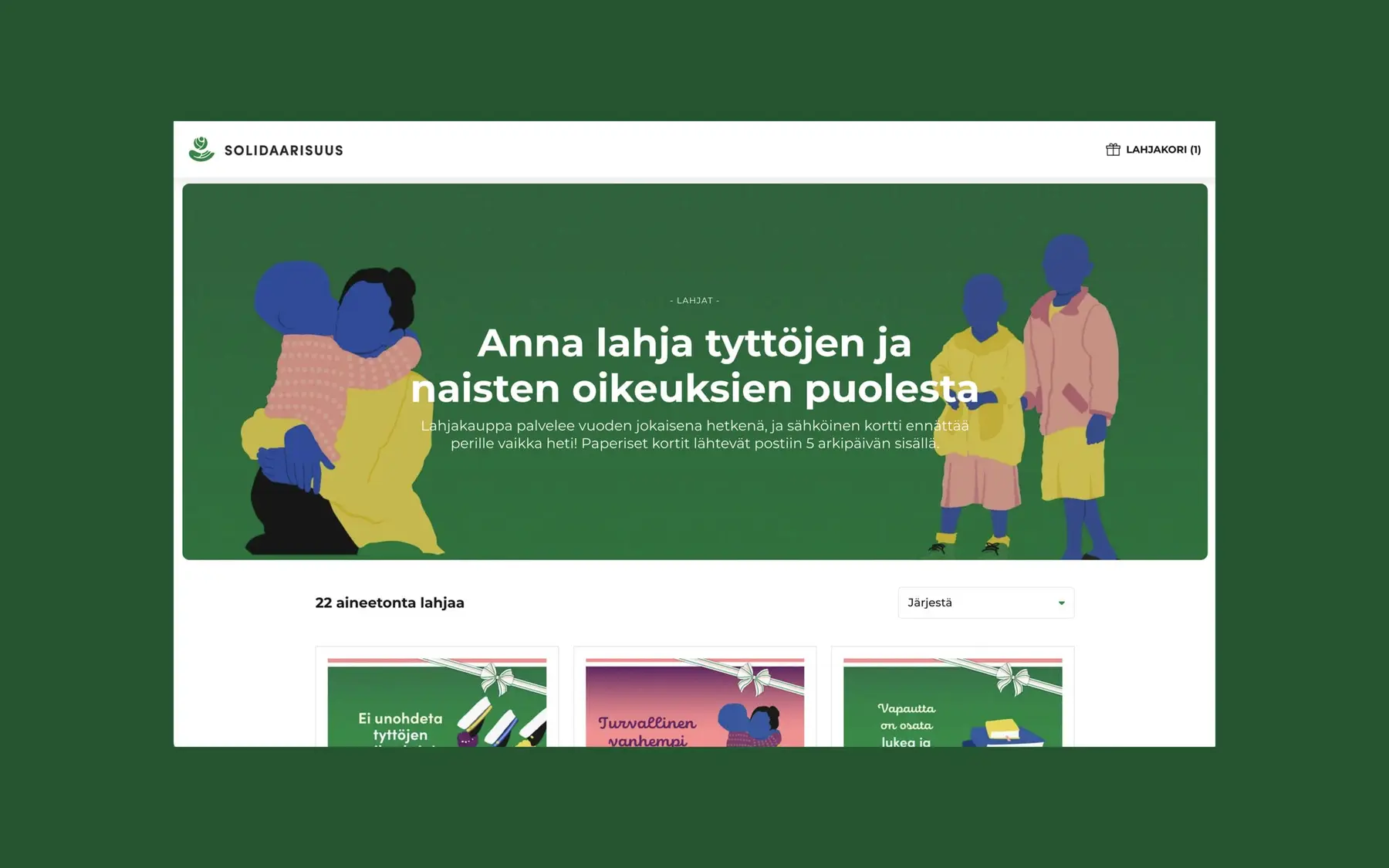
The goal of Junior Achievement Finland (Nuorten yrittäjyys ja talous NYT ry) is to inspire children and young people to feel confident about the future and to equip them with the skills needed for a changing world of work and everyday life. The organisation’s work is largely carried out through digital services. Which we have designed and developed in close collaboration with our client.
Frequently asked questions
How much does a learning environment cost?
A learning environment costs about EUR 40,000–100,000 excl. VAT. The price depends on user groups, the number of tasks and content, how far the gamification goes, integrations and how close the collaboration is. We always agree a fixed price after the definition phase. You can estimate the price with the generator in a few minutes, and it does not ask for your contact details.
What does gamification mean in a learning environment?
Gamification means bringing the mechanics of games into learning, so that learners stay interested and keep going. In NYT’s Yrityskylä Yläkoulu, ninth graders compete to run companies in a game arena. How much gamification to use depends on the learners and the goals. Not all learning material needs a game, and we tell you where it helps.
Can a learning environment serve both teacher and learner?
Yes. Teachers and learners have different needs, so we design separate views for them. NYT’s Teacher Portal is a web service where teachers at schools and colleges take NYT’s services into use and use them. Learners get their own task view. We agree the roles and permissions in the definition phase.
Does a learning environment work for large numbers of users?
It does when it is designed for that from the start, not only once problems appear. Since the renewal, NYT’s Yrityskylään app has had 2,680 classes and 38,371 students, and 373,254 tasks have been completed. We agree the number of users in the definition phase, because it affects the build and the servers. Servers are chosen per need.
How do teachers start using it without having to learn it first?
The service has to be clear enough that using it needs no separate learning. So we test it with real users before launch, and user training and user guides are part of the project. A teacher’s time is limited. The aim of NYT’s Teacher Portal was to make it easier for teachers to take services into use, and we follow the same aim in every learning environment we build.
What do you expect from us during the project?
You provide the learning content and the pedagogical expertise. We shape the content to suit the service. You also take part in workshops and reviews. We are responsible for progress and move things forward proactively. In app projects the collaboration is often close, and close collaboration can raise the price. So we agree how we work together, and how much, before we start.
What happens after launch?
After launch the service moves to Care. A fixed monthly price covers maintenance, updates and servers. The price stays fixed, so the costs are predictable. Further development is a separate optional agreement, used to develop the environment term after term. We develop NYT’s four services under a continuous development model. We also look after services that we did not build ourselves.
More web app services
Intranets and extranets
An internal or partner service that people actually open.
Customer portals
Customers handle their own affairs, signed in.
Integrations and APIs
Your web service talks to your checkout, customer and payment systems.


Read more on this
All articlesBlog
The EU and UX Dark Patterns – Manipulative Design Practices Under Regulation
“UX dark pattern” refers to a manipulative design practice within a digital service’s user interface. Like accessibility and cybersecurity, these design practices have become a focus of EU regulation. The regulation addresses how websites and applications may guide users in unethical ways. The goal is to protect the user’s sense of autonomy when using online services.
15 May 2025 · 3 min read
Blog
Why is Now The Perfect Time To Revamp Your Website, Not Later?
In today’s digital world, a website plays a bigger role in a company’s success than ever before. Users expect a smooth, modern experience matching the world’s best services. Given rapid technological advancements, evolving security threats, and changing search engine requirements, regularly updating your website has become essential. In this article, we explore why keeping your website up to date isn’t just a recommendation — it’s a must for staying competitive.
11 Dec 2024 · 2 min read