Author: Ella Killinen, DesignerPublished Updated 3 min read

Regulation targeting manipulative design practices – dark patterns – specifically aims to protect the user’s need for autonomy. Dark patterns are design techniques intended to steer, pressure or deceive users into making decisions that benefit the service provider – often at the expense of the user’s own interests.
What the EU regulation addresses
EU regulation focusing on manipulative design practices aims to make digital services fairer for users. However, a report published by the EU in early 2025 notes that the regulation still requires further clarification and more precise legal definitions.
Below are examples of design practices considered manipulative toward users.
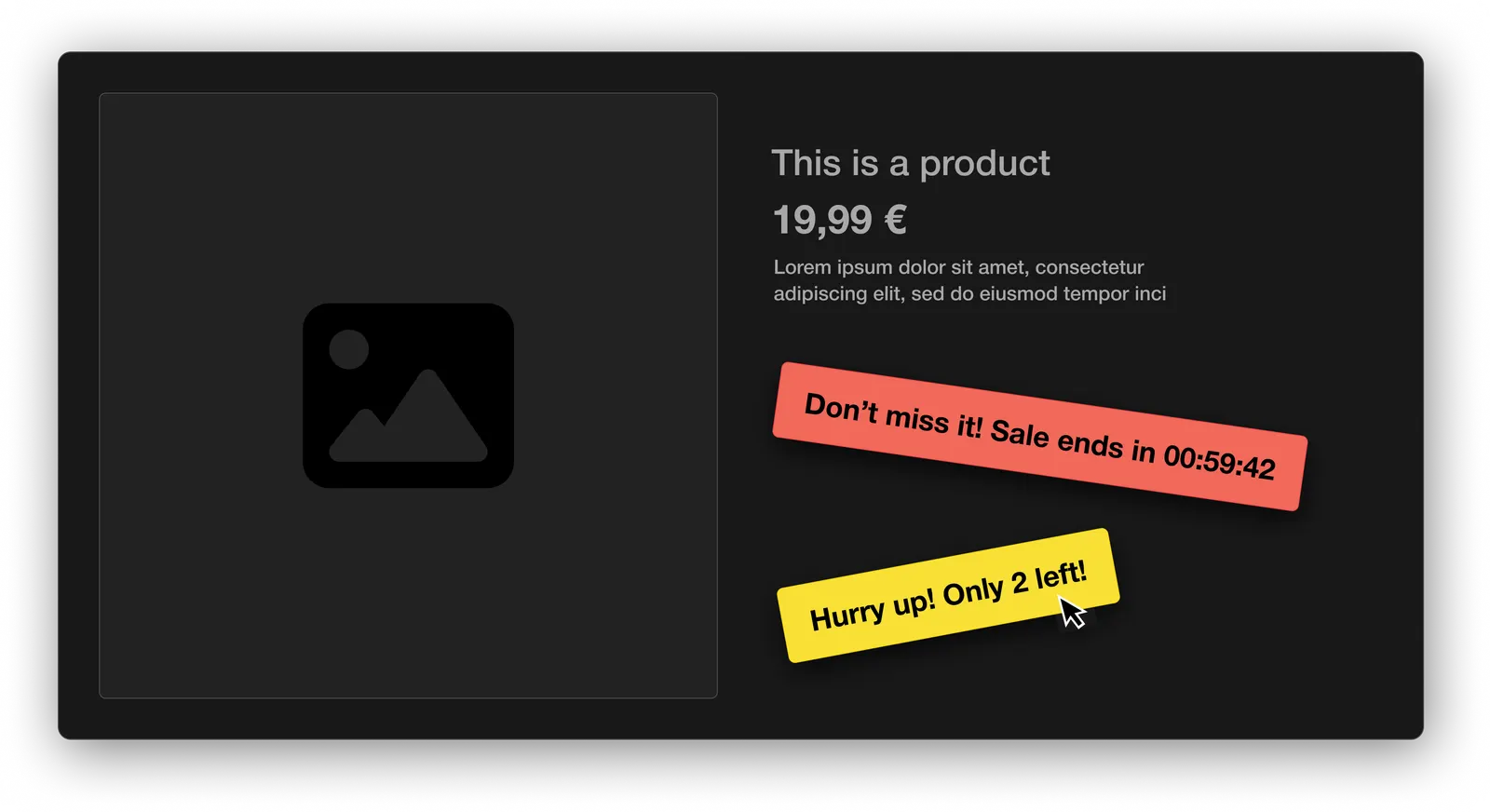
Pushing purchase decisions with fake urgency and fake scarcity
Online stores are not allowed to create a false sense of urgency. For example, notifications about low stock levels or an ending sales campaign are only allowed if the information is true and up to date.
No pressuring, hiding or deception
Cancelling a service or ending a subscription must be as easy as starting one. Users must not be misled or exhausted by complex processes.
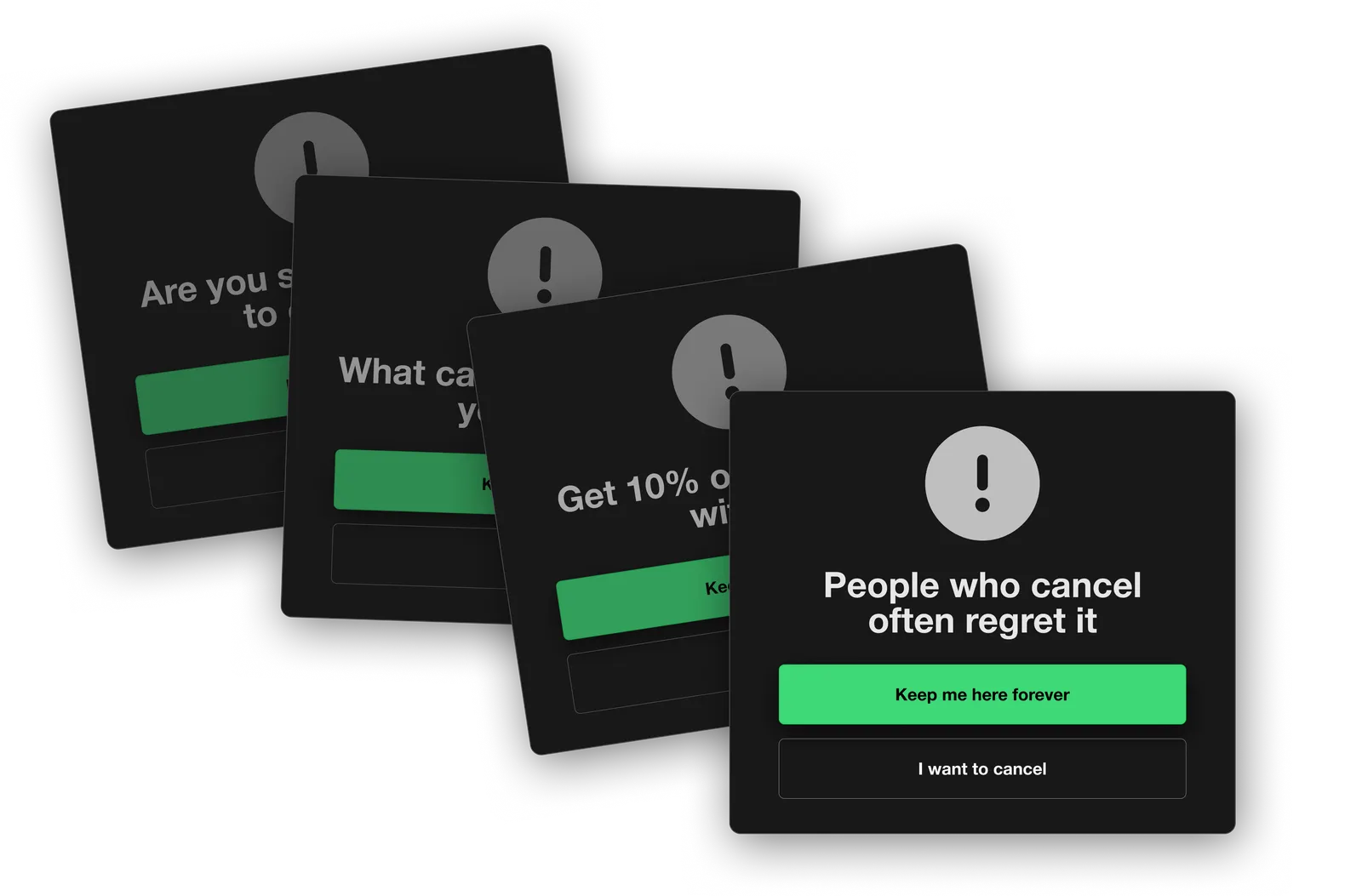
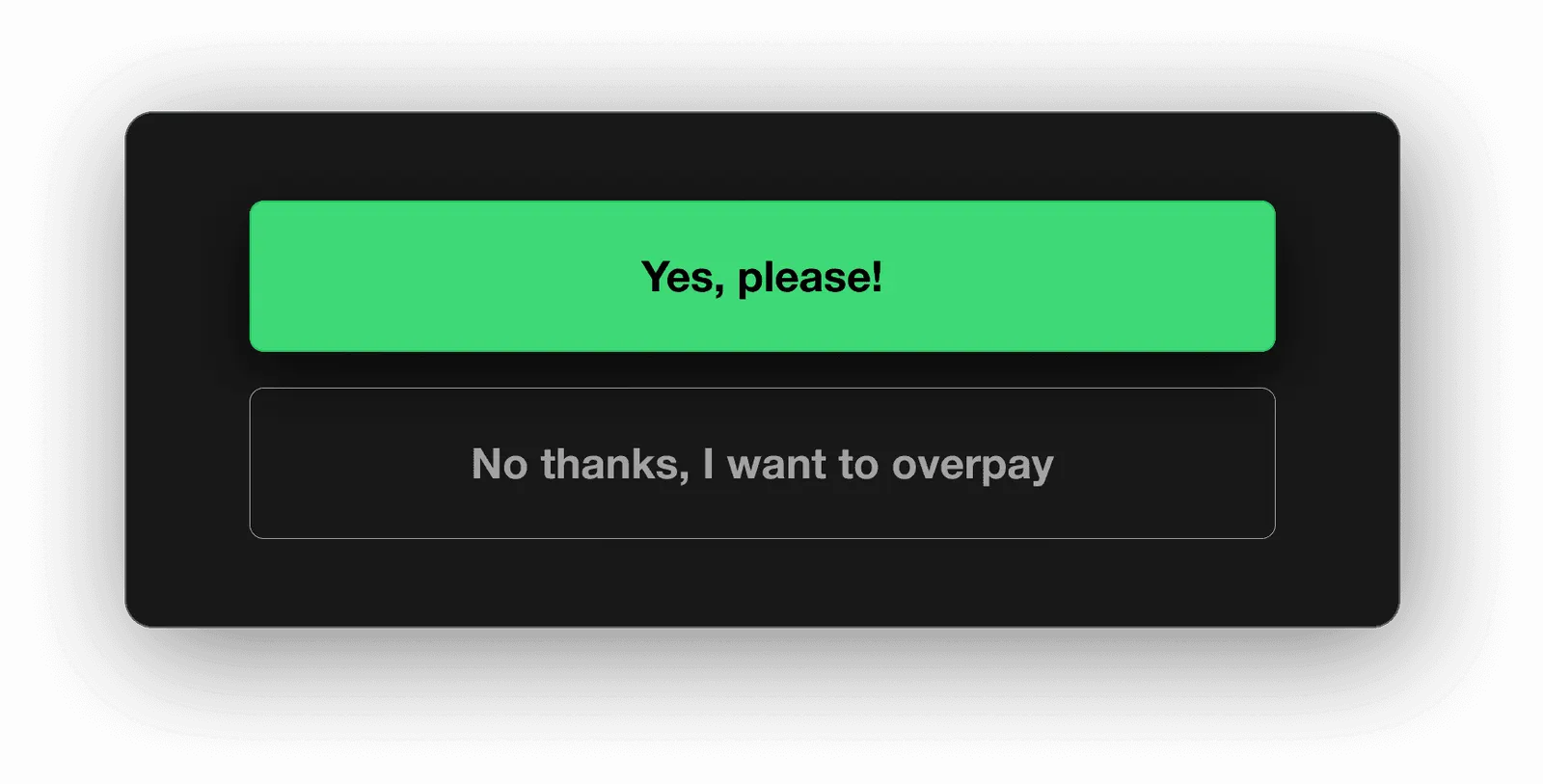
Acceptance and rejection options should also be balanced. The user interface must not strongly pressure users toward a single choice – such as by making the acceptance button significantly more prominent while making the rejection option hard to notice.
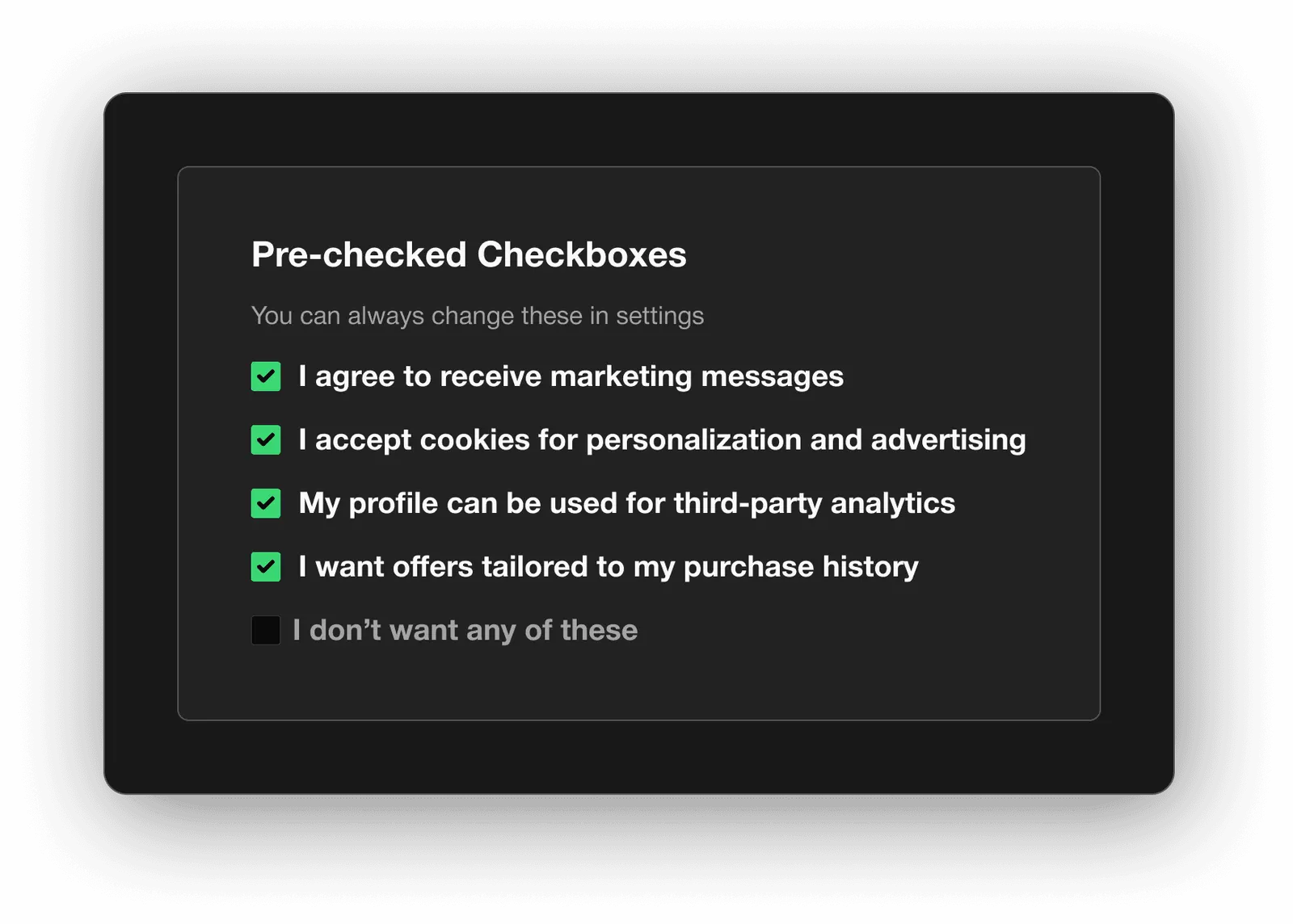
Preselected choices
The user interface must not make choices on behalf of the user. For example, consent for cookies or newsletters must be actively selected by the user – preselected options are not allowed.
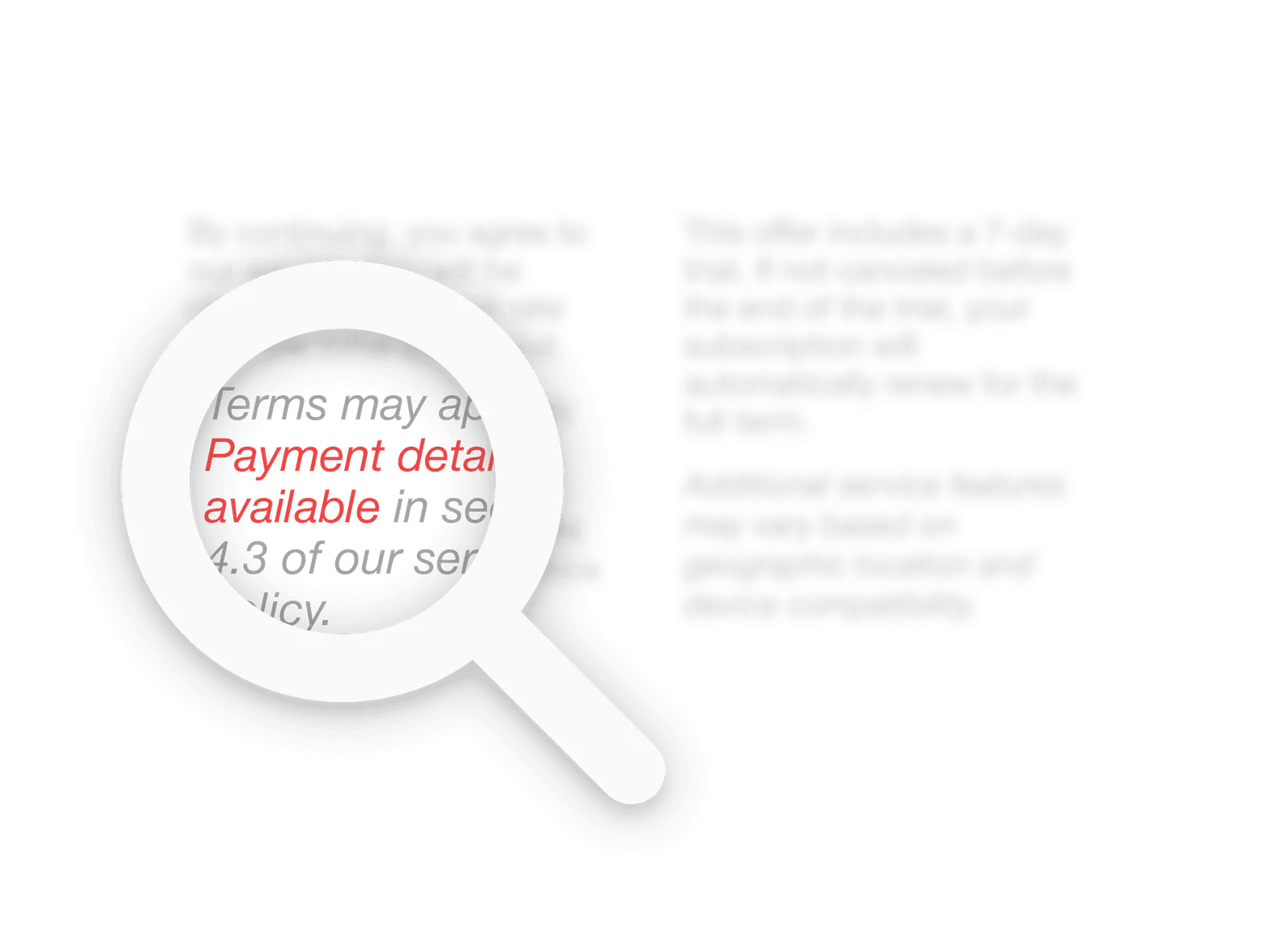
Hiding crucial information
Information related to payments, terms of use or other essential matters must not be hidden in fine print or made difficult to find. The information must be easily accessible and understandable.
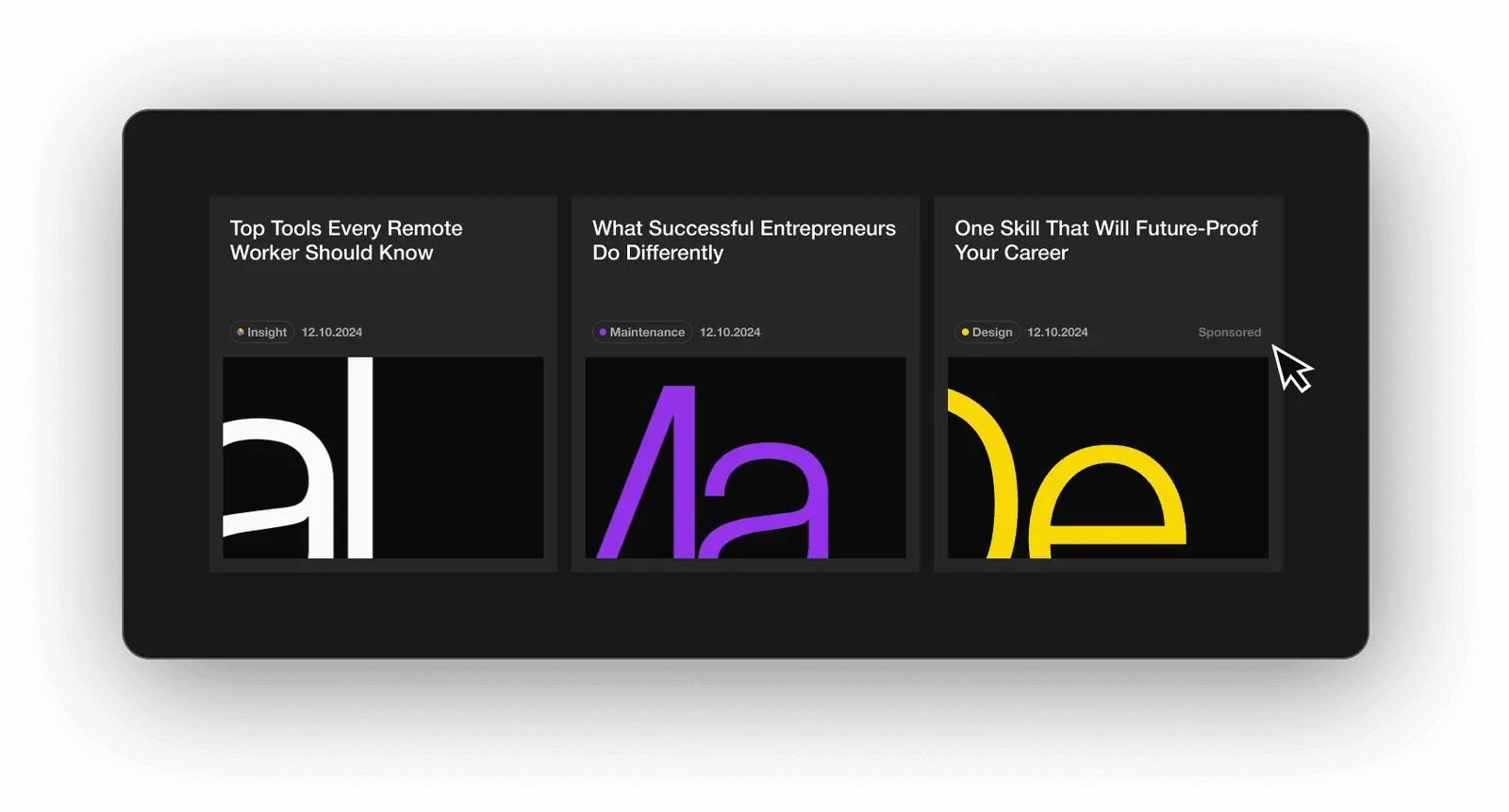
Hiding sponsored content
Paid content, such as sponsored blog posts, must be clearly labeled as advertisements. Users must be able to easily distinguish between editorial content and advertising.
Guild-tripping
Interfaces should not use guilt-inducing or emotionally manipulative language to steer users toward a desired choice. Emotional manipulation – such as buttons labeled “No thanks, I don’t want to save money” – are prohibited.
Users want to feel that they have control over how they interact with a digital service.
The user’s autonomy should be supported
Users want to feel that they have control over how they interact with a digital service. A good user experience supports this sense of autonomy.
This feeling of autonomy arises from elements such as a clear user interface, intuitive navigation, easily accessible and understandable content and, when needed, guidance through tooltips and instructions.
EU regulation aims to protect this experience, even though a single legal framework has not yet been fully established. Digital services play a central role in everyday life that using them should be not only easy, but also ethically sustainable.
Read more about the subject
If you’re interested in learning more about the EU’s handling of the topic, you can explore this publication by the European Parliament.
Read more
All articlesBlog
Online Fundraising: Our Tips and Practical Examples
Fundraising is the lifeline for many organisations and foundations. As public funding decreases, fundraising becomes an even more important source of income. Online donations are growing every year, and competition for donor attention is high. So how can you stand out and increase donations? In this article, we share our best tips for digital fundraising and give examples of projects where we have helped our clients succeed.
12 Sept 2025 · 5 min read
Blog
Cybersecurity: The NIS2 Directive Takes Effect in Finland
On April 8, 2025, a new cybersecurity law came into effect in Finland, bringing major changes for hundreds of organisations. This is the national implementation of the EU’s NIS2 Directive. And yes, it may apply to your organisation as well.
15 May 2025 · 3 min read
Blog
Research Findings – WordPress as an Enterprise Web Platform
The State of Enterprise WordPress Survey 2024 highlights how large-scale organizations leverage WordPress to achieve their business objectives. For those of us who primarily use WordPress as a content management system, the results are no surprise—we are well aware of its capabilities. However, for those considering their platform options, these findings will hopefully lower the threshold for choosing WordPress even further.
20 Feb 2025 · 1 min read